First of all, something that is hardly mentioned often enough – 4C hair is extraordinary. Not for all these “challenges” that have been described in the past, such as its density, its shrinkage, its tight coil pattern — but with all these “challenges.” The tighter the ends of the natural hair spectrum the more texture it produces that would defy gravity, no product can make it volume, and when it’s properly cared for, it looks so natural and so beautiful, that nothing in the hair world can compare.
The natural hair movement, in 2026, has evolved beyond a trend and become much stronger than ever before. This is a cultural revolution — a comprehensive rethinking of the definition of beauty, and whose beauty should be the focus of beauty discussions. And it’s all about 4C texture at this moment in extraordinary creative expression, global visibility and technical styling innovation.
If you’ve been rocking your natural texture for a while or you’re just experimenting on what your coils can do, then these are the 15 most beautiful, most wearable and most truly rewiring 4C hair styles that you can use in 2026.
Understanding 4C Hair Before You Style It
A little knowledge of the special characteristics of 4C hair will help you to understand why some techniques and products work and why others don’t.
In the natural hair typing system, 4C is the tightest and most densely coiled type of hair. Coils are tighter than 3C or 4A’s S curves, and are arranged in a Z pattern. This structure means:
- Very little shrinkage — 4C hair will shrink from 70-90% from its actual length when it is wet, meaning there is significant difference between wet and dry length.
- Variation in porosity – 4C hair can range from low to high porosity, which can impact the absorption of products and moisture retention of the hair.
- Extremely dense — it is the coils of hair tightly packed, so that it is inherently high volume, which can be embraced through styling.
- Moisture sensitivity – the coil is more likely to dry than looser coils and so a regular moisture base is the most crucial styling base.
With that in mind, it all starts to make sense when it comes to the rest of the styles below.
The Top 15 4C Hair Styles for 2026
1. The Full, Defined TWA (Teeny Weeny Afro)
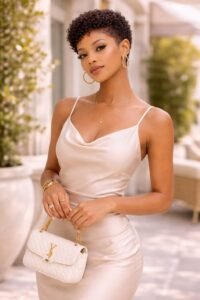
One of the most powerful and beautiful statements in natural hair is the TWA, which is a natural style with a short length, but enough time for the coils to grow and spring. The 4C texture is also a very close cut with high density which has a velvety feel at close length and almost sculptural quality on 4C texture.
A well-shaped TWA should be trimmed to an even shape, be moisturized to a soft shine and photograph with a tremendous impact. It is very bold and when proportioned to the face, it looks great with all facial shapes.
Styling advice: A light moisturizer that contains shea butter (applied to damp hair and followed by a light oil) keeps a TWA soft and defined all day long.
2. The Big, Beautiful Afro
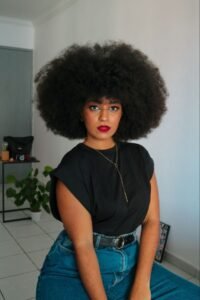
The Afro – not only is it a style that has been embraced with open arms but also picked out in its entirety, it is a style that is so iconic and so embedded in culture and so gorgeous that it could not be more. With 4C hair, it’s the tightness of the coils that’s the main reason they make afro hair so dense, perfectly round and require just a pick and proper foundation moisturizer to make.
The afro on 4C texture that is moisturized and fully stretched is truly breathtaking. Sprays a texture halo around the wearer to occupy the visual space and expresses a confident and joyful self-assurance that is all its own aesthetic style.
3. Twist-Out on Stretched Hair
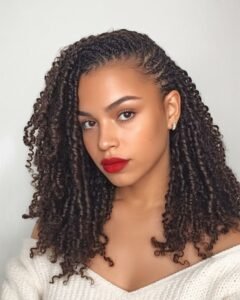
The twist-outs (twist and dry and then carefully unwind) produce a tautened pattern in distinct places that show length and dimension at the same time. A twist-out is a style that is applied to stretched (blow-dried or banded) hair, and on 4C hair, it is a very elongated style because it will not allow the hair to shrink and compact the style.
When done right, a 4C twist-out will result in curls with a gorgeous definition and a softness that will be very natural looking and quite a bit longer and more dimensional than a wash-and-go.
4. Flat Twist Updo
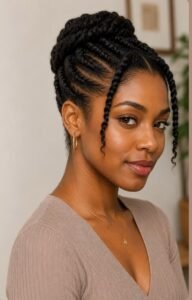
One of the most versatile and protective 4C hair styles is by taking sections of hair and twisting them flat across the scalp, in a direction of your choice (usually back, up or in decorative patterns), then tucking the ends into a puff, bun or arranged-updo. The flat twists maintain an organized and laid-back look while also forming a beautiful, intricate and unique pattern against the scalp.
Two twists pinned back at the crown are the most basic application of a flat twist updo, while more advanced styles involve an all-over geometric pattern, with the scalp as the canvas. In either case, it’s shiny, protective and absolutely beautiful.
5. High Puff with Defined Edges
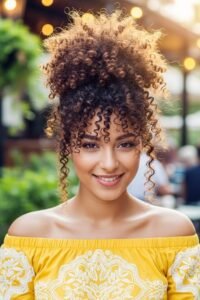
One of the most popular everyday hairstyles for 4C hair is a high puff in which all of the hair is pulled up at the very top and the coil is allowed to grow upward and outwards. With tighter texture it will give a great height and volume to look casual and down-to-earth, or more intentional and specific.
There is only one thing that makes an ordinary high puff into a real beauty—edge styling. Carefully laid edges, using baby hairs around the hairline to be carefully brushed and gelled and styled into patterns or neat and clean lines, frame the puff with precision and intentionality, completing the look.
6. Protective Box Braids
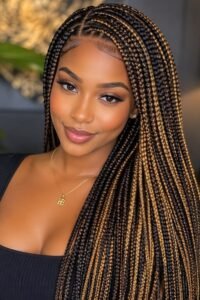
One of the most popular and most versatile protective styles for natural hair, regardless of type, is box braids, which are the sectioned individual braids that are installed with additional hair extensions. Box braids are especially favored by people who have 4C hair because they give weeks of rest to the natural hair while also providing a ton of versatility when it comes to styling.
Box braid variations in 2026 are now at an extreme level of creative expression with jumbo, medium and micro sizes; colorful extension hair; knotless applications that lessen tension; and styling variations from free hanging long box braids to complex pinned box braids.
7. Bantu Knots
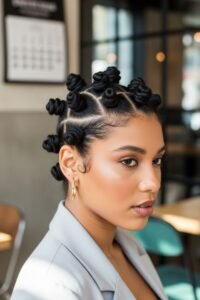
Bantu knots are small geometric coils of twisted hair that are tucked into the scalp in sections, with deep roots in African and Black hair traditions, and a visual beauty all their own. Bantu knots are very durable on 4C hair because of the tight coils of the natural texture.
Bantu knots when used as an overall look can be considered a high fashion style as it creates a striking and architectural look. They unfold after drying to create a gorgeous Bantu knot out pattern, another complete style by itself.
8. Finger Coils
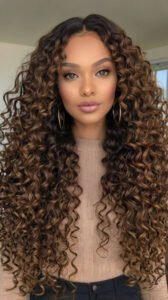
One of the most structured and long-lasting 4C natural hairstyles is to coil around a single finger, known as finger coiling, which involves taking small portions of the hair and wrapping it around a finger in a deliberate manner. It’s a labor-intensive process, but the coils will have a truly high spring and definition and will hold for several days if protected at night.
For hair that is 4C, the finger coils will give an effect between the free form of a wash and go and the planned structure of a twist out, without being too rigid or too planned.
9. Crochet Braids with Curly or Coily Extensions
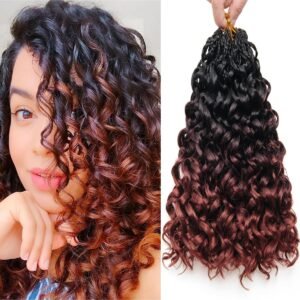
Crochet braids are a style that involves the natural hair being cornrowed first and then extension hair being sewn into the cornrows with a crochet hook, making it a dramatic change in the way the hair looks, while still keeping it well protected under the cornrows. For 4C hair, the cornrow base is a great way to get a good hold on the hair during installation and the end result can last for a few weeks.
Crochet styles befitting 4C hair patterns (tight coils, kinky twists and loc-inspired extensions) will enable those with natural hair to completely change their look in 2026 without heat or chemicals.
10. Space Buns
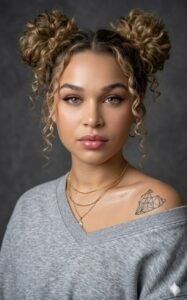
When the hair is parted in the middle and bunched at the top-sides of the head, it creates a playfully bold, beautiful style on 4C hair. The density and volume of tightly coiled texture spells fullness and presence in space buns and is a lot more than that on finer hair.
Space buns can be pulled tight to create a smooth, neat look, or pulled loose to create a natural, textured look.
11. The Pineapple Style
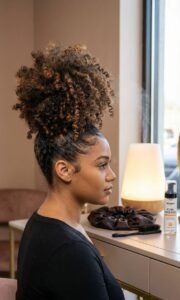
High ponytail is the most dramatic, most voluminous natural ponytail arrangement that the high ponytail has reached – all hair pulled away from the head in a loose top and allowed to grow in a crown – a corona. On 4C hair, the pineapple effect is quite imposing and truly theatrical — mass o’ voluminous curls that really stand out.
Although the pineapple look is more commonly worn at night to maintain curl definition, it is also a legitimate daytime look that exudes confidence, boldness and an utterly beautiful look that doesn’t get any easier to do.
12. Loc Styles (Starter Locs & Established Locs)
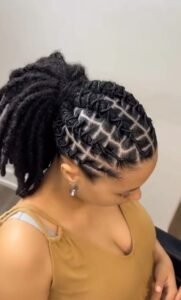
One of the most beautiful and spiritually and culturally significant choices of hair in nature is locks, which have matted and compacted with time into rope like cylinders. The tight coil pattern in 4C hair makes it natural and easy to form locs and creates very full and dense locs.
Whether the locs are growing out or already rooted in, there is a vast range of styling possibilities to choose from, including free hanging, bun, updo and pinned styles. Loc styling is now in an extraordinary creative space in 2026.
13. Cornrow Styles with Creative Patterns
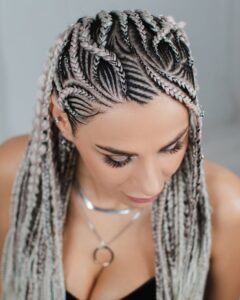
Braided in rows close to the scalp, cornrows on 4C hair make sleek, sharp lines against the scalp that are not only beautiful on their own, but can also serve as effective protective bases for other styles. 4C texture has a tightness that results in a great braiding hold, which is why it creates well-defined and durable cornrows on this texture.
Cornrow artistry is in an extraordinary state of creative expression in 2026, with a wide range of both geometric and curved designs, as well as spirals and graphic sculptural shapes all used as means of artistic expression instead of just practical styling.
14. Wash-and-Go with Gel Definition
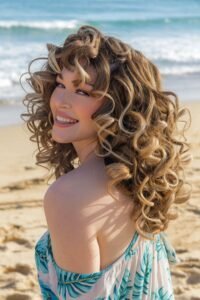
The wash and go technique is very difficult to master or achieve on 4C hair without the proper knowledge and technique because the products applied to wet hair must produce a defined texture and not frizzy or shaggy hair texture as it dries. The best method is to use a heavy duty gel that forms a covering on the curls as they dry, a leave in conditioner for wet hair and then a curl cream to define the curl.
The “scrunch out the crunch” method involves gently squeezing the dried gel cast to push out soft, well-defined coils below, resulting in a gel cast that is both defined and soft. This technique works best with 4C hair that is well moisturized and healthy, and produces a natural, cloudy look.
15. Faux Locs
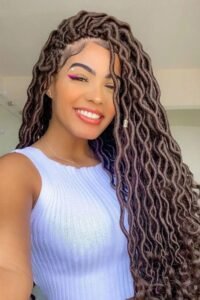
Faux locs are not permanent but are achieved through a technique where extension hair is wrapped around each braided section to create a beautifully full look like real locs but on a temporary basis and with a dramatic effect. The natural texture of 4C hair is ideal for faux loc wrapping, ensuring a secure, lasting, and authentic-looking style.
For faux locs, expect goddess locs with loose, wavy extensions for a bohemian touch, distressed locs for a mature look, and brightly coloured locs for a bold and maximalist statement in 2026.
Essential Moisture Routine for Healthy 4C Hair
All great styles start with healthy and well moisturized hair. For 4C texture, the best moisture sealing is achieved using either the LOC or LCO method:
- L (Leave-in conditioner): For wet hair, apply to hair right after washing to keep them moist. The main source of moisture is water, the leave-in seals it in.
- O (Oil): A light, leave-in oil (such as jojoba, argan or grapeseed) forms a second layer of seal that reduces moisture loss.
- C (Cream): Last applied cream or butter for curls that gives extra moisture and helps as a base for styling.
There is a variation, though, which works better with high-porosity 4C hair: the LCO order (leave-in, cream, oil) will work better for 4C hair with high porosity because the cream is applied before the final oil seal.
Other care practices that have a big impact:
- Deep condition every week with a protein/moisture balance product
- Use satin pillowcases and bonnets each night – always!
- Detangle with fingers, do not detangle while dry, do only when wet and conditioned.
- To prevent single strand knots which form from coil tangling, stretch the hair regularly, either with banding or braiding or blow drying on low heat.
Final Thoughts
4C hair doesn’t need to be managed or worked out. It’s a canvas — it’s one of the finest, most expressive, most truly beautiful hair canvases in all the world. Whether you’re looking for a full afro to give you a sense of style or patterned cornrows to display your creativity, box braids for protection or finger coils for their allure, this is the guide for you and the 15 styles that are possible with the right knowledge, products and approach.
Your coils are not because of anything! They’re about your heritage, your biology and your one-off and one-way identity.
Use them with all the pride that they deserve!
Some commonly asked questions regarding 4C Hair
Q1. So what can I do to minimize shrinkage in 4C hair styles?
It is important to remember that 4C hair is naturally considered shrinkage because it is a positive attribute of the hair and can be a negative when you wish to display your hair’s true length. The best shrinkage-reduction methods are those of stretching the hair before or while it’s being styled. Banding – soft hair ties wrapped around the hair sections at the length of the hair. Stretching the hair without any heat. When the thread is wrapped tightly around sections it will result in major elongation, known as African threading. Using low heat blow-dryer on a cool or warm setting (with a diffuser or without) extends the curl pattern without altering the natural texture of the hair. Styles that are put up on stretched hair (such as twist-outs and braid-outs) hold more length compared to styles created on fully shrunken hair.
Q2. What are the best products for 4c hair?
Moisture is the most effective category for 4C hair, that is, a leave-in conditioner, a curl cream or butter that has a high degree of slip and a sealing oil or gel. Choose products that use water as the first ingredient, include emollients such as shea butter, coconut oil or avocado oil and have no sulfates (to remove moisture) or drying alcohols (which make skin brittle). On 4C hair, any gel that doesn’t contain drying alcohols and has a strong hold is a must have for wash-and-go definition; it will help you get a definition as the hair dries. For protective styles, a lighter option is better, to prevent scalp buildup.
Q3. What is the frequency of washing 4c hair?
The majority of 4C hair experts suggest washing their hair 1-2 times a week, depending on the type of hair they have, whether high porosity or low porosity; and whether they have an oily scalp or not. Co-washing with conditioner alone, instead of shampoo, should be used between shampooing to prevent stripping away of oils from the hair. If using a clarifying or normal shampoo, use a deep conditioning treatment immediately thereafter to rebalance with moisture. When your scalp feels itchy or uncomfortable, has an excess of product buildup or requires washing sooner than usual, it is a sign that your hair needs more washing.
Q4. Is it possible to get 4c hair to grow long?
Not only that, 4C hair grows at the same average rate as any other hair type — about half an inch per month, as long as it’s in healthy condition. Many people do not believe 4C hair will grow because of the huge shrinkage – hair that looks shoulder length when coiled will be about 4 times the same length when stretched! The main problem that needs to be tackled is length retention, as the coils can easily break because they are prone to single strand knots (SSKs) and tangling at the ends, which needs to be overcome by regular detangling, protective styles and moisture. With a healthy 4C hair routine that takes care of its moisture and very little handling, hair can grow to any length in time.
Q5. Which is the most effective way to protect 4c hair?
Any style that results in less manipulation of the hair, and protects the ends will help you retain your length. Box braids, crochet braids, flat twist ups, and loc styles are great protective styles since they conceal the hair from the external exposure and mechanical handling which causes hair to break. The main rules for a protective hairstyle are that it shouldn’t be too tight, tension applied to the scalp and hairline will cause traction alopecia in time, the natural hair should be well hydrated before the style is installed and the style shouldn’t be left up for longer than the suggested weave time (6-8 weeks) as this will cause matting and too much shedding.